


Comfortable Floor Mats for Daycare Story Time
Last Updated: November 24, 2026
Quick Summary
A good daycare story time mat is thick enough to cushion sitting children, easy to wipe clean, and large enough to seat a full group without crowding. Measure the reading area first and leave a clear walkway around the edges. Our large padded playmats measure about 200cm x 140cm x 1.5cm, giving a generous seating zone for group reading.
- Measure the reading area first and leave a clear walkway around the edges.
- Large padded playmats measure about 200cm x 140cm x 1.5cm.
- Choose a mat with padding that cushions children without rolling under small feet.
- Pick a wipe-clean surface, since snacks and craft mess are part of daycare life.
- Ask suppliers for material declarations in writing, and confirm the mat lies flat on your floor.
Table of Contents
- How to Choose Comfortable Floor Mats for Daycare Story Time
- What Makes a Floor Mat Suitable for a Daycare Story Time Area
- Early Learning Centre Floor Safety Requirements to Check Before Buying
- How to Sanitise Daycare Play Mats Without Damaging Them
- The Benefits of Sensory Rugs in Early Childhood Education
- Thickness, Materials and Comfort for Sitting Children
- Booking Your Story Time Floor Mats with Grace & Maggie
- Frequently Asked Questions
How to Choose Comfortable Floor Mats for Daycare Story Time
Story time works best when children can settle comfortably on the floor, and the right mat makes that possible. At Grace & Maggie, we design padded playmats and memory foam rugs for daycare centres, early learning environments and schools, so we see the practical demands of these spaces every day. The short answer is that a good story time mat is thick enough to cushion sitting children, easy to wipe clean, and large enough to seat a full group without crowding.
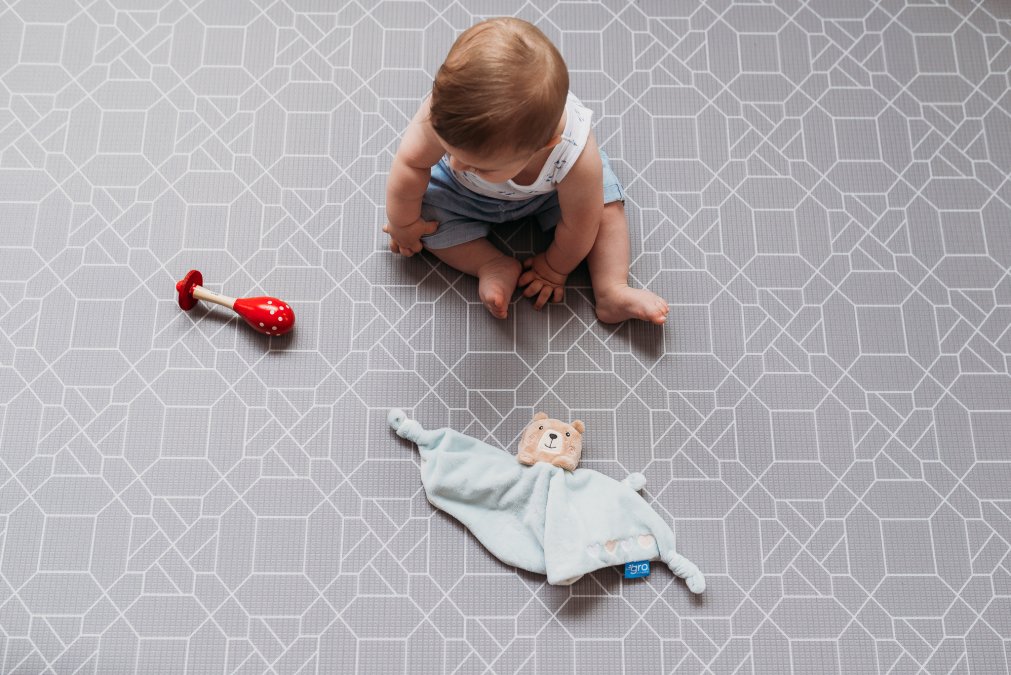
Start with the group size and the room. A mat that fits three children on a quiet afternoon may be too small for a full circle of toddlers. Measure the reading area first, then choose a size that leaves a clear walkway around the edges. Large padded playmats measure approximately 200cm x 140cm x 1.5cm, which gives a generous seating zone for a group.
Next, think about how the mat will be used. Story time usually means sitting cross-legged for long periods, so comfort matters more than in a short play session. Look for a mat that feels soft underfoot but still supports the body, rather than one that sinks and makes children wobble.
What Makes a Floor Mat Suitable for a Daycare Story Time Area
A suitable mat balances softness, stability and hygiene. Children will sit, lie down, shuffle and climb on it, so the surface has to cope with constant use.
Padding is the first thing to check. A mat with too little cushioning leaves children feeling the hard floor beneath, while very thick foam can roll or shift under small feet. Our TPU Padded Playmats offer a soft, supportive surface for everyday play and learning.
The surface should also be wipe-clean. Snacks, spills and craft mess are part of daycare life, so a mat that absorbs liquid or traps crumbs becomes a hygiene problem quickly. Our TPU Padded Playmats are free from BPA and PVC, which matters when many small hands and mouths will touch the surface every day.
Finally, consider the design. A reading corner often needs to look calm and welcoming, not like a storage area. Simple patterns and soft neutral tones tend to suit story time better than busy prints, because they keep the focus on the book.
Early Learning Centre Floor Safety Requirements to Check Before Buying
Before you buy, check the safety credentials of the mat. This is the area where a careful buyer can avoid problems later, and it is also where Childcare settings have their own documentation and safety obligations to consider.
Start with the materials. Confirm whether the product is free from known harmful additives, and ask the supplier to state this clearly in writing. Our non-toxic playmat materials and safety guide explains what to look for in material declarations before you buy. Our TPU Padded Playmats are free from BPA and PVC, and we are happy to point you to the product details so you can check them yourself.
Next, look at edges and stability. A mat that curls at the corners or slides on a polished floor creates a trip hazard. Check that the backing grips the floor and that the edges lie flat, especially in a busy room where children move quickly. A simple test is to lay the mat on the actual floor surface, polished timber, vinyl or carpet, and walk the perimeter in socks; any lift at the edge is a problem that will worsen with daily use.
Also check how the mat will be cleaned and maintained, since this affects long-term safety as well as hygiene. A surface that can be wiped with a suitable cleaner stays safer than one that needs harsh products to remove stains. Ask the supplier which cleaning agents are compatible with the surface, because the wrong product can break down a coating and leave a tacky finish that traps dirt.
For specific obligations, such as what your service must document under the National Quality Framework, check the official guidance from the Australian Children's Education and Care Quality Authority (ACECQA) at ACECQA National Quality Framework guidance. Requirements vary by service type, so confirm the details that apply to your centre before purchasing. In practice, most services fold floor-covering checks into their general environment and hygiene risk assessments rather than treating the mat as a separate item, so it helps to know where the mat fits in your existing documentation.
Buyers should also ask suppliers directly about any relevant standards for children's products and play equipment, and about flammability and phthalate testing. A supplier who can name the tests performed and provide current documentation is easier to assess than one who simply says the product is "safe".
Watch out: a mat can pass a materials check and still fail in service if it is the wrong size for the room, so confirm dimensions against your measured reading area before you sign off on the purchase. Securing the right floor space often reveals a broader need to source durable educational materials for family daycares in larger quantities to ensure every corner of the room remains both functional and inviting.
Finally, think about the floor beneath the mat. A cushioned mat on a hard, unforgiving floor is doing most of the comfort work, but it cannot compensate for a surface that is itself uneven or damaged. If the reading corner sits on a slope or over a join between floor coverings, address that first so the mat lies flat and does not become a collection point for crumbs and moisture.
How to Sanitise Daycare Play Mats Without Damaging Them
Keeping story time mats clean is one of the most common daily tasks in a childcare setting, and the wrong method can shorten a mat's life. Our daycare cleaning guide for memory foam mats walks through the specific steps for keeping these surfaces in good condition. Always start by reading the care instructions that come with the product.
For routine cleaning, remove loose crumbs and debris first, then wipe the surface with a mild detergent solution and a damp cloth. Work from the cleaner areas toward the messier ones so you do not spread contamination. Let the surface air dry fully before children sit on it again.
Sanitising is a separate step. Use a sanitiser that is suitable for the surface, and follow the dwell time on the label so it has time to work. Avoid bleach-heavy or abrasive products unless the manufacturer specifically allows them, because these can break down foam and coatings over time.
A common mistake is soaking a mat or scrubbing hard at stains. This can damage the surface and let moisture reach the foam underneath, which is harder to dry and can cause odours. Spot clean where possible and dry the mat thoroughly after each deep clean.
For general guidance on hygiene standards in childcare, the Department of Education's resources at Australian Government Department of Education childcare resources are a useful reference.
The Benefits of Sensory Rugs in Early Childhood Education
Sensory rugs give children a soft, varied surface to explore. Children who sit and move on a cushioned surface have a stable base for listening, touching and interacting with materials.
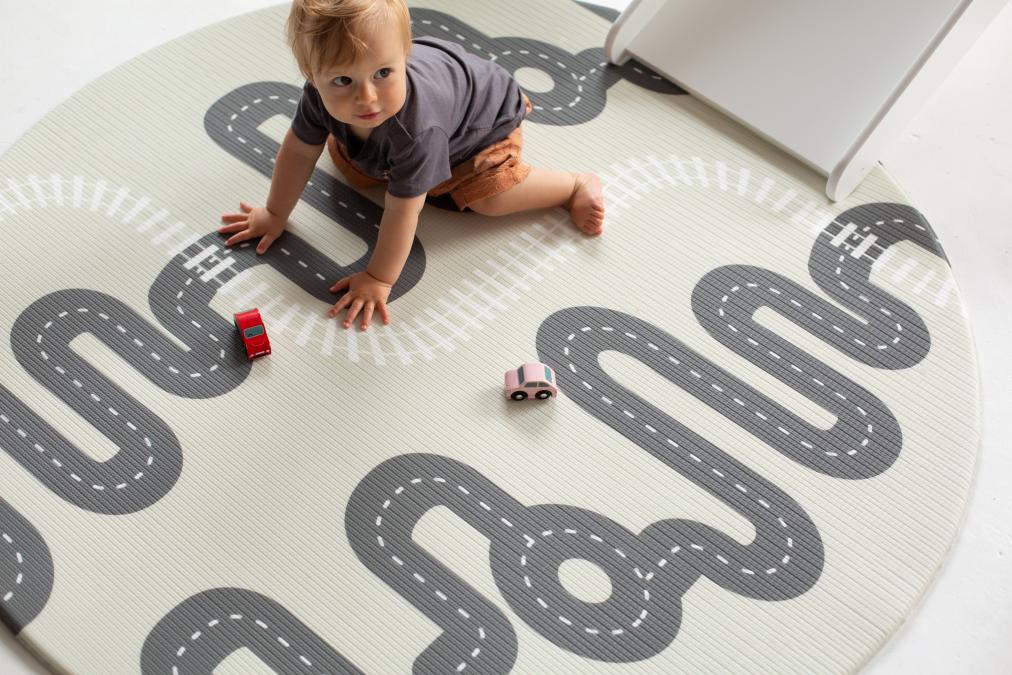
The tactile mechanism is the most familiar. A textured or patterned surface invites children to touch, crawl and settle, which supports tactile exploration. A defined, comfortable seating area also helps children understand where group time happens, which can make transitions smoother for younger children. In practice, educators often find that a mat with a clear edge and a calm pattern does more for settling a group than a busy print, because the boundary itself signals that story time is starting.
The practical takeaway is to choose for the group you actually have: a mat large enough that children are not crowded, dense enough that adults can sit comfortably, and quiet enough in pattern that the book stays the focus.
Thickness, Materials and Comfort for Sitting Children
Thickness is an important comfort factor for sitting children. Our playmats measure about 1.5cm thick, which gives enough cushioning for a seated child while keeping the mat stable and easy to fold or store.
Materials also affect comfort. A TPU-coated surface, as on our Padded Playmats, adds a soft, supportive layer that is easy to keep clean.
Comfort for educators matters too. A mat that is too thin can leave adults sitting on hard floors during group reading. If educators sit with children, a more substantial surface or a mat placed near a sturdy seat will help everyone stay comfortable through a full session.
Our range includes a few styles. The Forrest / Blush Large Padded Playmat ($219.00 AUD) has a soft pastel look and a geometric side. The Baby Driver / Boho Large Padded Playmat ($219.00 AUD) is reversible, with a track design on one side and a neutral boho pattern on the other.
The mats in this range differ in thickness, material and look, as summarised below.
| Product | Key spec | Note |
|---|---|---|
| Large Padded Playmats | About 1.5cm thick | Cushions seated children and stays stable |
| TPU Padded Playmats | TPU-coated surface | Soft, supportive and easy to keep clean |
| Forrest / Blush Large Padded Playmat | $219.00 AUD | Soft pastel look with a geometric side |
| Baby Driver / Boho Large Padded Playmat | $219.00 AUD | Reversible: track design or neutral boho pattern |
Booking Your Story Time Floor Mats with Grace & Maggie
If you are planning a new reading corner, our team can help you compare the options and choose a size and style that suits your room. Visit our book a consultation page to start the conversation, or browse our full range of comfortable playmats for childcare reading corners to see what suits your space.
For more detail on specific choices, our guide to safe flooring for sensory play covers materials, safety and hygiene. If you are weighing up memory foam options, read our honest look at whether memory foam rugs are worth it for daycare before you decide.
Frequently Asked Questions
How do I choose a daycare floor mat that is safe for toddlers?
Start by checking that the mat is free from BPA and PVC and that the surface is soft, supportive and easy to wipe. Look for a non-slip underside so it stays put on hard floors, and confirm the size suits your room so children are not sitting on the edges. Ask the supplier for product specifications in writing before you buy, particularly for materials and dimensions, and check that the mat is designed for high-use early learning environments rather than occasional home use.
How often should daycare play mats be cleaned?
Wipe down story time mats at the end of each day with a mild, child-safe cleaner, and sanitise them more thoroughly on a weekly schedule or whenever there has been a spill or illness in the room. Allow the surface to dry completely before children sit on it again. Avoid harsh abrasives and strong solvents, which can break down coated surfaces over time, and follow the care instructions supplied with your mat.
Are sensory rugs worth buying for a childcare centre?
Sensory rugs give children a soft, varied surface to sit, lie and move on during story time and quiet activities, which supports comfort and helps children settle into group sessions. They also define a calm reading area within a larger room. Because they are used by many children every day, choose a rug that is durable, wipe-clean and suitable for regular use in an education setting rather than a decorative piece designed for light domestic use.
Can I get Grace & Maggie floor mats funded through NDIS?
Grace & Maggie is a Registered NDIS Provider, and its padded playmats are designed to be soft, supportive and easy to clean for families and services that need sensory-friendly flooring. Whether a specific product is claimable depends on your participant plan and your support coordinator's guidance, so confirm eligibility with them before purchasing.
