


How to Clean Memory Foam Mats: Daycare Guide 2026
Table of Contents
- What You'll Need to Clean Memory Foam Mats
- Daily Maintenance Routine for Daycare Playmats
- Step-by-Step: How to Clean Memory Foam Mats
- How to Remove Stains from Memory Foam Mats
- Non-Toxic Cleaning Solutions for Childcare
- How to Remove Odours from Foam Playmats
- Drying and Long-Term Care for Memory Foam Mats
- Common Mistakes to Avoid
- Frequently Asked Questions
Last Updated: September 27, 2026
What You'll Need to Clean Memory Foam Mats
Cleaning memory foam mats properly starts with the right kit. You don't need much, but the wrong products can wreck the foam.
Here's what to gather before you start:
- Two soft microfibre cloths
- A spray bottle
- Warm water
- Mild liquid soap or diluted white vinegar
- Bicarb soda for stains and smells
- A vacuum with a soft brush head
- Towels for blotting
Skip anything harsh. Bleach, ammonia-based sprays and abrasive scrubbing pads break down the foam surface.
At Grace & Maggie, we design our memory foam snuggle rugs with a water-resistant coating, so most spills wipe straight off. That's the whole point. Less scrubbing, more play.

Daily Maintenance Routine for Daycare Playmats
A daily maintenance routine for daycare playmats takes about five minutes and saves hours of deep cleaning later. Consistency matters more than effort.
Each day, do this:
- Shake or vacuum the mat to lift crumbs and sand
- Wipe visible marks with a damp cloth
- Check under and around the mat for trapped debris
- Air the room so moisture doesn't settle in
For high-traffic early learning rooms in Langwarrin and across VIC, a quick midday wipe helps too. Food spills and craft glue set fast.
Step-by-Step: How to Clean Memory Foam Mats
Here's the core method for how to clean memory foam mats without damaging the foam. The golden rule: never soak memory foam. Water trapped inside causes mould and breaks down the cell structure.
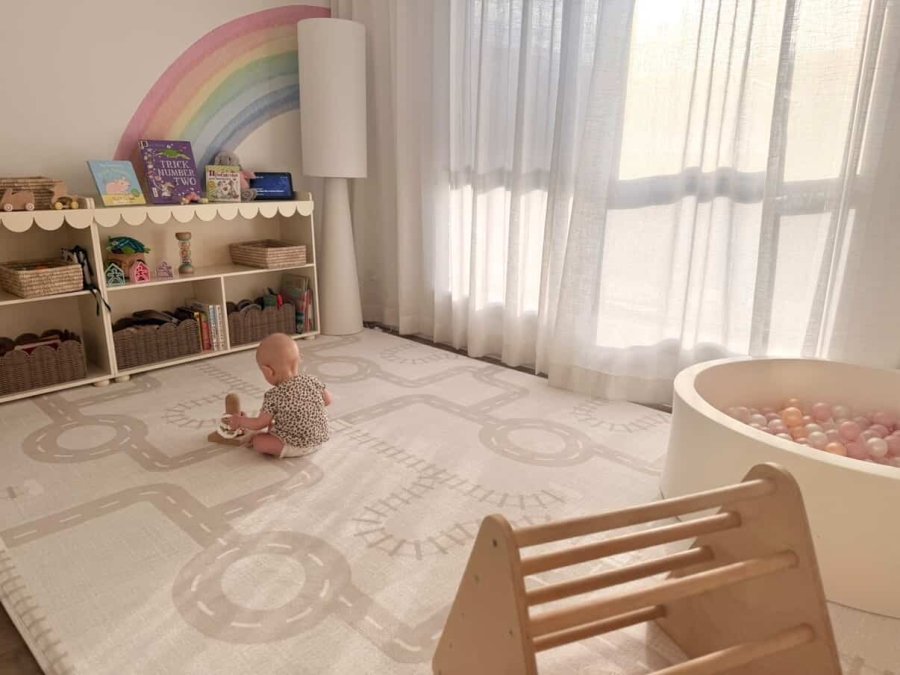
Follow these steps:
- Vacuum both sides with a soft brush head
- Mix warm water with a few drops of mild soap
- Dampen a cloth (never soak it) and wipe in sections
- Rinse the cloth and wipe again with clean water
- Blot dry with a towel immediately
- Stand the mat on its edge to air fully
How you clean depends on the surface type. Let's break that down.
Cleaning TPU-Coated Memory Foam Mats
TPU-coated mats are the easiest to clean. The coating seals the foam, so spills sit on top instead of sinking in.
Wipe with a damp cloth and mild soap. For sticky marks, a little diluted vinegar works well. Then dry straight away.
Our premium TPU padded playmats are built for exactly this. High-use education spaces need a surface that shrugs off paint, food and endless little hands.
Cleaning Uncoated or Fabric-Topped Foam Mats
Uncoated or fabric-topped mats need a gentler touch. You can't flood them, and scrubbing too hard pushes dirt deeper into the fibres.
Vacuum first. Then spot-clean with a barely damp cloth and mild soap. Work from the outside of the stain inward so it doesn't spread.
For fabric tops, a light sprinkle of bicarb soda left for fifteen minutes lifts odours before you wipe.
How to Remove Stains from Memory Foam Mats
Act fast and most stains come out. The longer a stain sits, the deeper it sets into the foam or coating.
Match the stain to the fix:
Stain Type |
Best Approach |
Watch Out For |
|---|---|---|
Food and drink |
Damp cloth, mild soap |
Don't rub, blot instead |
Crayon or texta |
Diluted vinegar, soft cloth |
Test on a hidden spot first |
Glue or craft paste |
Warm damp cloth, gentle lift |
Never scrape with metal |
Wee or milk |
Bicarb soda paste, then wipe |
Dry fully to stop smells |
Mud |
Let it dry, then vacuum |
Don't wipe while wet |
For tough marks, make a paste from bicarb soda and a little water. Spread it on, wait ten minutes, then wipe away. Rinse the cloth and blot dry.
Non-Toxic Cleaning Solutions for Childcare
Non-toxic cleaning solutions for childcare settings matter because little ones crawl, tumble and mouth everything. Whatever you clean with, they end up close to it.
Stick to these safe options:
- Warm water with a few drops of mild dish soap
- White vinegar diluted one part to three parts water
- Bicarb soda for paste and odour control
- A drop of tea tree oil for its natural cleaning properties
Avoid bleach, ammonia and strong fragrances around play areas. They leave residue and can irritate sensitive skin and airways.
How to Remove Odours from Foam Playmats
Odours come from trapped moisture and spills that soaked in. To remove odours from foam playmats, you need to dry the mat out, not just mask the smell.
Sprinkle bicarb soda across the surface. Leave it for a few hours or overnight. Then vacuum it off.
For stubborn smells, wipe with diluted vinegar and air the mat outside in the shade. Sun can fade colours, so keep it out of direct harsh light.
If your centre is in Langwarrin, a covered outdoor area on a dry day works well for airing mats between sessions.
Drying and Long-Term Care for Memory Foam Mats
Drying is where most people go wrong. A damp mat is a mouldy mat.
Lay the mat flat or stand it on its edge in a well-ventilated room. A fan speeds things up. Never fold a wet mat, and never stack wet mats on top of each other.
For long-term care:
- Vacuum weekly to stop grit wearing the surface
- Rotate the mat so wear stays even
- Keep it out of direct sun to protect colours
- Store flat or loosely rolled, never tightly folded
Our snuggle rugs use high-density 35D foam, which holds its shape far better than cheaper, lower-density mats. Denser foam resists flattening and lasts longer in busy rooms.
Common Mistakes to Avoid
Most mat damage comes from a handful of easy-to-fix mistakes.
- Soaking the mat instead of damp-wiping
- Using bleach or harsh chemicals near children
- Folding a wet mat before it dries
- Scraping stains with rough or metal tools
- Leaving spills to set for hours
- Drying in direct sun and fading the colours
A well-cared-for memory foam mat handles years of daily play. Grace & Maggie makes award-winning padded playmats and snuggle rugs designed for busy childcare and education spaces, with TPU coatings that wipe clean and foam that holds up. Browse the range and find the right fit for your room.
Keeping play areas clean in a busy childcare setting is a constant job, and the right mat makes it far easier. Grace & Maggie builds memory foam mats for exactly this: a water-resistant TPU coating that wipes clean in seconds, high-density 35D foam that resists flattening, and materials free from BPA and PVC. As a registered NDIS provider trusted by education centres across the country, we help you create spaces that stay safe and easy to care for. Get started with Grace & Maggie and find a playmat built to handle real, messy, wonderful play.
Frequently Asked Questions
Can you use a steam cleaner on memory foam playmats?
Steam cleaners are not recommended for memory foam mats. The heat and moisture can break down the foam structure, cause delamination of any coating, and leave trapped moisture that leads to mould. For everyday sanitising in childcare settings, a spray bottle of diluted white vinegar followed by a damp microfibre wipe is safer and just as effective. If you need deeper disinfection, check the manufacturer's care instructions first, as some TPU-coated mats tolerate gentle steam on the surface only, never saturated.
How do you remove stains from memory foam mats in a daycare setting?
Act fast. Blot the stain with a clean cloth, then apply a paste of bicarbonate of soda and water for food or drink spills. For bodily fluids, use a diluted vinegar solution, then wipe with clean water. Never scrub aggressively, as this pushes stains deeper into the foam. For TPU-coated memory foam mats, most spills wipe away with a damp cloth because the surface is water-resistant.
What is the best way to disinfect foam mats without damaging the material?
Use a two-step approach: clean first with warm soapy water to remove dirt and oils, then disinfect with a diluted white vinegar solution (one part vinegar to three parts water). Spray lightly, leave for a minute, then wipe dry. Avoid bleach, ammonia and alcohol-based cleaners on memory foam, as they degrade the foam and any protective coating. For childcare settings, this method meets hygiene needs without leaving harsh chemical residues on surfaces children touch and lie on daily.
How often should memory foam mats be deep cleaned in early learning environments?
Daily maintenance, such as wiping surfaces and spot-cleaning spills, should happen every day. A deeper clean, including vacuuming crevices and washing removable covers, is best weekly. Full deep cleans with a gentle foam-safe solution work well monthly or whenever odours linger. In high-use daycare rooms, increase frequency during illness outbreaks or after messy sensory play. Mats like the Grace & Maggie Snuggle Rugs have a water-resistant coating that makes routine wiping quick, which helps keep daily cleaning realistic.