


A Parent and Educator Guide to NDIS Approved Sensory Equipment Providers
Last Updated: November 25, 2026
Quick Summary
There is no such thing as an NDIS approved sensory equipment provider, because NDIS approval is not an official status. Instead, check whether sensory equipment providers are registered with the NDIS Commission and confirm their registration covers the supports you are buying.
- Ask for a provider's NDIS registration number in writing and verify it on the live NDIS Commission register.
- Sensory equipment may be funded when it links to a documented plan goal and meets funding criteria.
- Centre-grade padded playmats should have a sealed wipe-clean surface, non-slip base and be free from BPA and PVC.
- A calm-down zone works better with three modest items than one expensive statement piece.
- Classroom sensory equipment supports access to the curriculum and should never be used as a reward or punishment.
Table of Contents
- Are There NDIS Approved Sensory Equipment Providers?
- How to Check a Provider's NDIS Registration Status
- NDIS Funding for Sensory Equipment: What You Can Claim
- Sensory Products for Childcare and Early Learning Centres
- Padded Playmats for Early Learning Spaces
- Sensory Equipment for Schools and Classrooms
- Choosing Sensory Equipment in Langwarrin and Nearby Areas
- Ordering From Grace & Maggie for Your Setting
- Frequently Asked Questions
Are There NDIS Approved Sensory Equipment Providers?
There is no such thing as an "NDIS approved" sensory equipment provider. What does exist is registration as an NDIS provider, which is a different thing entirely.
This distinction matters more than most buying guides admit. Parents and educators searching for ndis approved sensory equipment providers are usually trying to answer one question: will this purchase be claimable? The honest answer is that fundability depends on the participant's plan and goals, not on a supplier's marketing badge.
Grace & Maggie is a Registered NDIS Provider, and we sell sensory products for homes, childcare centres and schools. We also know that registration alone does not guarantee a claim will be approved.
NDIS Commission provider registration information
Quick comparison: what provider claims actually mean
| Claim you'll see | What it really means | What to check |
|---|---|---|
| "NDIS approved provider" | Not an official status | Ask for their NDIS registration number |
| "Registered NDIS Provider" | Listed with the NDIS Commission | Verify the number on the Commission's register |
| "NDIS friendly" | Marketing phrase only | Nothing to verify; assess the product on merit |
| "We invoice plan managers" | A billing arrangement | Confirm with your plan manager before ordering |
How to Check a Provider's NDIS Registration Status
Verifying registration takes about five minutes and saves months of frustration. Registered providers can be checked against the official NDIS provider register, searchable by name or registration number. For childcare centres and schools, the check is the same, but the stakes are higher because a purchase order may need to be justified to a finance team or a plan manager.
Here is the step-by-step process we would use:
- Ask for the registration number in writing. A legitimate provider will supply it without hesitation. If they deflect or say they are "NDIS approved" rather than registered, treat that as a warning sign.
- Search the NDIS Commission's provider register. Enter the number or the business name.
- Check the registration covers the supports you are buying. A provider may be registered for, say, household tasks but not for assistive products or capacity building. Sensory equipment purchases usually fall under core supports (consumables) or capacity building (assistive technology), so confirm the provider's registration includes the relevant category.
- Confirm the registration is current. Do not rely on a screenshot or a certificate the provider sends you; check the live register.
- Ask how they invoice. Plan-managed participants should check the invoice requirements with their plan manager. Self-managed participants should keep receipts for any claim.
- Get a written quote with product codes. For centres and schools, this helps with procurement and ensures the item matches what was approved. Ask for the quote to include freight and any assembly costs.
- Confirm the return policy in writing. Fit and suitability are hard to judge online, especially for seating and floor items. A clear returns process protects both the setting and the participant.
Watch out: some suppliers display a registration number that covers an unrelated support category. A registration for household tasks does not mean sensory equipment purchases are covered under that registration. Read the listed support categories carefully, and if you are unsure, ask the provider to confirm in writing which category the item will be invoiced under.
For a deeper walkthrough on claiming, see our guide to NDIS funding for sensory mats, which covers reasonable and necessary supports and the paperwork an OT report needs.
NDIS Funding for Sensory Equipment: What You Can Claim
Sensory equipment may be funded when it connects to a goal in the participant's plan and meets the relevant funding criteria. Supplier status does not change the outcome.
Whether an item is claimable depends on how it is used and what the participant's plan says. Items bought to support a specific goal are more likely to need supporting documentation from a treating professional.
Three things strengthen a claim:
- A clear link between the item and a documented goal in the plan
- A written recommendation from an OT, speech pathologist or other treating professional
- Evidence the item is the most cost-effective option that meets the need
If you are self-managed, you pay upfront and claim back, so keep every invoice. Plan-managed participants should confirm with their plan manager before ordering. Agency-managed plans have the tightest rules and the slowest turnaround.
Not every item will get across the line. When a purchase isn't funded, many families simply buy it privately, and that's a perfectly reasonable outcome. The equipment still does its job.
Sensory Products for Childcare and Early Learning Centres
Early learning rooms have a sensory problem that home setups don't: thirty children, one space, and noise levels that climb by mid-morning. Products that work at home often fall apart in a centre within a term.
What holds up in practice:
- Padded floor surfaces for tummy time, floor play and group activities
- Adjustable seating that supports children who need to rock or recline to settle
- Calming corner pieces that give a child somewhere to retreat without leaving the room
- Easy-clean covers because spills, paint and bodily fluids are a daily reality
The mistake most centres make is buying a single statement piece and expecting it to solve sensory regulation across the whole room. It won't.
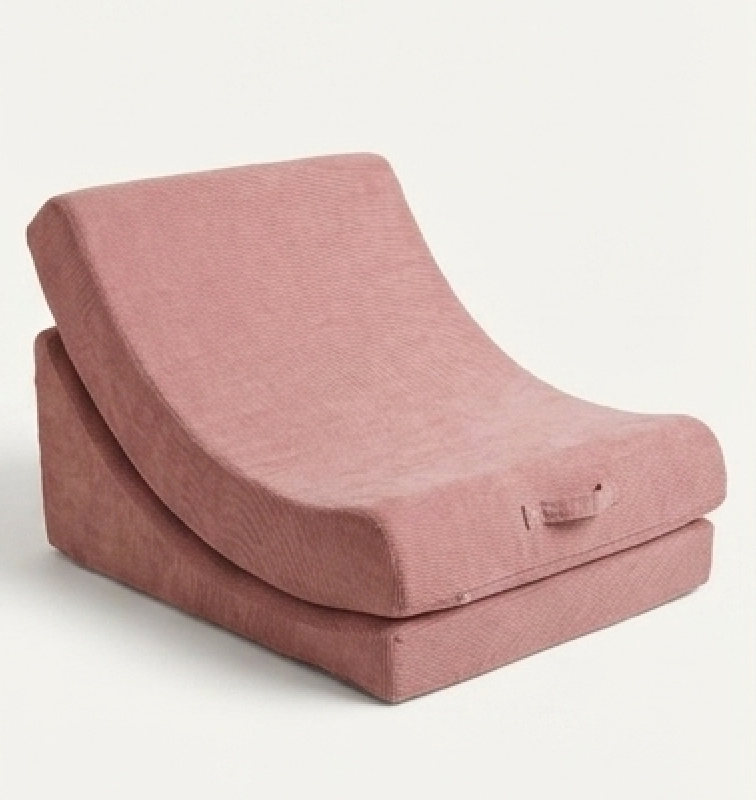
Our Cove Sensory Lounger was designed with exactly this in mind. Its adjustable design moves from an upright seat to a gentle recline, and built-in handles make it easier to carry or reposition around the room.
Padded Playmats for Early Learning Spaces
A padded playmat is the single most useful piece of sensory flooring in an early learning setting, and also the one most often bought badly. The cheap versions delaminate, curl at the edges and trap moisture underneath. Just as flooring needs to stay secure and easy to clean, sensory-friendly swimwear can help carry thoughtful sensory choices into water-based activities.
What to look for in a centre-grade mat:
- A sealed, wipe-clean surface rather than a fabric cover
- Enough thickness to cushion a fall without becoming a trip hazard at the edges
- Materials free from BPA and PVC, since these surfaces get licked, crawled on and chewed
- A non-slip base, which matters for children using mobility aids as much as for toddlers
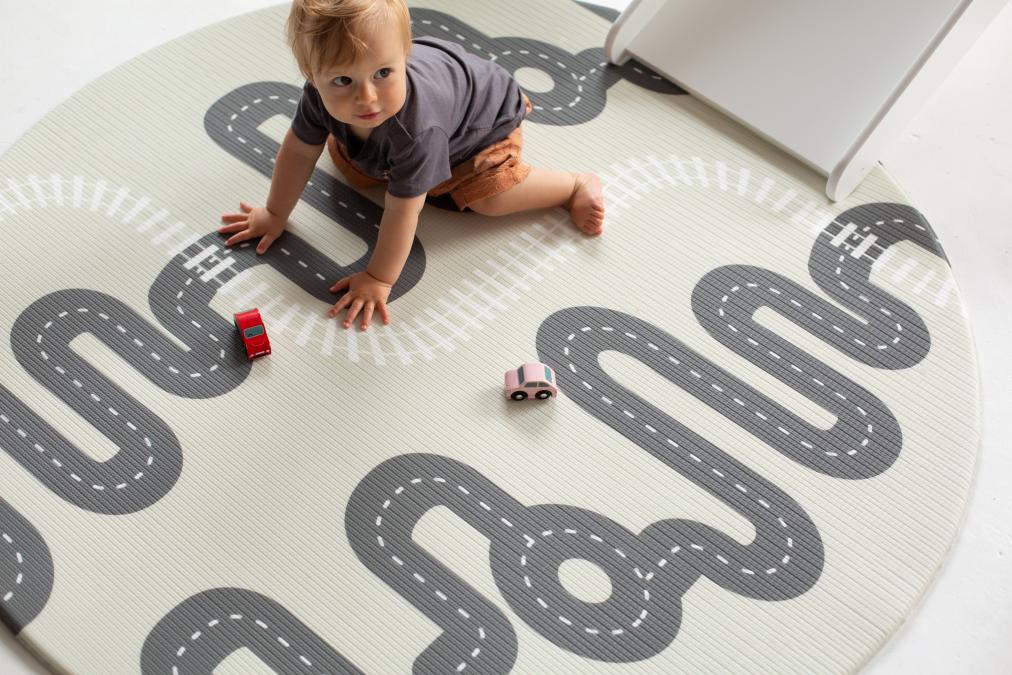
Our TPU Padded Playmats provide a soft, supportive surface that is easy to clean, and are free from BPA and PVC. For a fuller breakdown of thickness, grip and cleaning, read our childcare guide to safe flooring for sensory needs.
Sensory Equipment for Schools and Classrooms
Classroom sensory equipment has a different job from childcare equipment. It needs to support regulation without disrupting a lesson, and it needs to survive being used by children old enough to test it.
The most practical classroom additions tend to be:
- Adjustable seating for reading corners and quiet zones
- Weighted or deep-pressure items for children who seek that input
- Fidget and chew tools kept in a discreet box rather than on display
- Earmuffs for sound-sensitive students during assemblies and group work
A common mistake is treating sensory equipment as a reward or a punishment. It is neither. It's a tool that some students need to access the same curriculum as everyone else, and framing it that way stops the resentment that builds when one child gets the "special chair."
If you're planning a room from scratch, our guide to designing a sensory-friendly classroom layout covers zoning, sightlines and where to place seating relative to noise sources.
Choosing Sensory Equipment in Langwarrin and Nearby Areas
For families and centres around Langwarrin, the practical question is less about who is nearby and more about who can deliver the right item and support the claim.
Here is what we would weigh when choosing a provider for a Langwarrin setting:
| Factor | Why it matters locally | What to ask |
|---|---|---|
| Delivery to Langwarrin and surrounds | Bulky items are painful to return | Confirm freight cost and timeframe before ordering |
| NDIS invoicing | Plan managers need correct paperwork | Ask about invoice requirements |
| Product depth | One supplier rarely covers every need | Check the full range, not just the hero product |
| Returns policy | Fit and suitability are hard to judge online | Get it in writing |
| Assembly and installation | Some items need setup | Ask if assembly is included or available |
| Ongoing support | Needs change over time | Ask about replacement parts and warranty |
Before you order, confirm the freight charge, delivery window and delivery method with the provider.
If you are searching for sensory equipment providers near me in the Langwarrin area, start with the NDIS register rather than a search engine.
For centres and schools, it also pays to think about total cost and purchasing logistics. When requesting a quote, ask what it includes, such as freight and any assembly.
Safety, fit, and ongoing suitability are part of the local decision too.
If you need help identifying suitable equipment, an occupational therapist or other qualified professional can assess the setting and document the relevance of the item to a child's needs.
Ordering From Grace & Maggie for Your Setting
Ordering for a centre or school is different from ordering for a home, mainly because someone has to justify the spend later. We keep that simple: itemised invoices, clear product descriptions and a range built for high-use education environments.
Our range covers several everyday needs. The Cove Sensory Lounger offers adjustable seating and calming movement. The Snuggle Rugs give you a memory foam surface for floor play and reading. The padded playmats cover the everyday floor. The Cove is designed in Australia.
Browse the full padded play mat range to see sizing and finishes for your room.
Most settings don't need a room full of equipment. They need three or four pieces that genuinely get used, chosen for how children actually move and settle rather than how they look in a catalogue.
Frequently Asked Questions
Are sensory equipment providers NDIS approved?
No provider is 'NDIS approved' in the sense of the NDIS endorsing their products. What matters is whether the provider is registered as an NDIS provider, which you can check on the official register. It does not mean every item they sell is automatically fundable. Always check the specific product against your plan goals before ordering.
Can NDIS funding be used for sensory equipment?
NDIS funding for sensory equipment is possible when the item is reasonable and necessary for your disability support needs and connects to a goal in your plan. Your plan manager or support coordinator can confirm how it applies to your plan. Keep the written evidence linking the item to your goals, because the NDIS may ask for it.
How do I check whether a sensory product can be funded through the NDIS?
Start with your plan goals and ask whether the item helps you or your child achieve one of them. Then confirm the provider is registered if you are plan-managed or agency-managed. Where possible, get a quote and a short written rationale from an allied health professional. Keep receipts and records.
Can an NDIS participant buy sensory equipment from a non-registered provider?
Funding rules for buying from registered or non-registered providers depend on your plan management type. Check with your plan manager or support coordinator before you order. If you are unsure which category you fall into, check your plan or ask your support coordinator before you order.
What sensory equipment is useful in childcare and education settings?
Settings that support sensory needs often use padded playmats for floor play and tummy time, memory foam snuggle rugs for reading corners, and adjustable sensory loungers for calm-down zones. These items support touch, movement and emotional regulation through the day. Choose products with removable covers that are easy to clean, and check product details for materials and safety information.
Are padded playmats or sensory loungers covered by the NDIS?
Whether they are covered depends on how they are used and what your plan says. Ask your therapist or support coordinator to document the link to your goals. Keep the invoice and a note explaining the purpose.
