


Safe Flooring for Sensory Needs: A Childcare Guide
Table of Contents
- Understanding Sensory Needs in Childcare and Education Settings
- How Flooring Affects Sensory Processing and Regulation
- NDIS Sensory Equipment Requirements: What Providers Need to Know
- Best Memory Foam Playmats for Nurseries and Early Learning Rooms
- Easy-to-Clean Sensory Flooring Solutions for Busy Classrooms
- Safety, Durability and Selecting Safe Flooring for Sensory Needs
- Creating a Sensory-Friendly Environment in Your Setting
- Frequently Asked Questions
Last Updated: September 26, 2026
Understanding Sensory Needs in Childcare and Education Settings
Sensory needs describe how a child's nervous system takes in, filters and responds to touch, sound, light and movement. For some children, a hard, cold or noisy floor is genuinely uncomfortable, and that discomfort shows up as fidgeting, meltdowns or refusal to join floor-based activities. This guide from Grace & Maggie looks at what makes safe flooring for sensory needs work in real early learning rooms, from Langwarrin, VIC to centres across the country.
Here's the part most flooring guides skip: the floor is the one surface a child touches constantly, all day, in every position. They sit on it, crawl on it, lie on it for story time and crash onto it during active play. Get it wrong and you'll spend your week managing behaviour that the environment created.
Below, we'll break down how different surfaces affect sensory regulation, what the NDIS expects, and how to choose something that survives a room full of toddlers.
How Flooring Affects Sensory Processing and Regulation
Flooring affects sensory processing because it delivers constant tactile, auditory and temperature feedback to a child's body. A soft, warm surface tells the nervous system "safe and settled." A hard, echoing one keeps it on alert.
Three sensory channels matter most:
- Tactile: texture and give underfoot. Smooth vinyl feels slippery and cold; memory foam feels stable and warm.
- Auditory: sound absorption. Hard floors bounce noise around a room, which is exhausting for sound-sensitive children.
- Proprioceptive: the body's sense of where it is in space. Firm-but-yielding surfaces give children clearer feedback when they sit, kneel or tumble.
What most guides miss is that these channels interact. A noisy room makes a scratchy floor feel worse. Fixing the acoustics and the surface together does more than either change alone.
NDIS Sensory Equipment Requirements: What Providers Need to Know
NDIS sensory equipment requirements come down to one test: does the item help a participant pursue their goals, and is it reasonable and necessary? For families and providers, that means documenting how a specific item supports regulation, participation or skill development, not just that it feels nice.
The NDIS guidance on assistive technology and equipment sets out how equipment is assessed and funded, and the thresholds differ depending on cost and complexity. Low-cost assistive technology is generally handled differently from higher-cost items that need a formal assessment.
Practical steps that make applications smoother:
- Get an occupational therapist's recommendation that names the item and the goal it supports.
- Keep quotes and product specifications on file.
- Record how the child currently responds in floor-based activities.
- Note whether the item is for one child or shared use in a centre.
Grace & Maggie is a registered NDIS provider, which means families and coordinators can work with us directly on sensory-friendly floor and seating products. For anyone searching for sensory equipment near me in Langwarrin, our range is built for exactly this purpose. Creating a calm environment extends beyond the playroom, as thoughtful material choices remain essential when designing a sensory friendly nursery.
Best Memory Foam Playmats for Nurseries and Early Learning Rooms
Memory foam playmats are the practical answer for nurseries and early learning rooms because they combine cushioning, quiet and easy cleaning in one surface. High-density foam holds its shape under daily use, so the mat doesn't flatten into a lumpy trip hazard after a term.
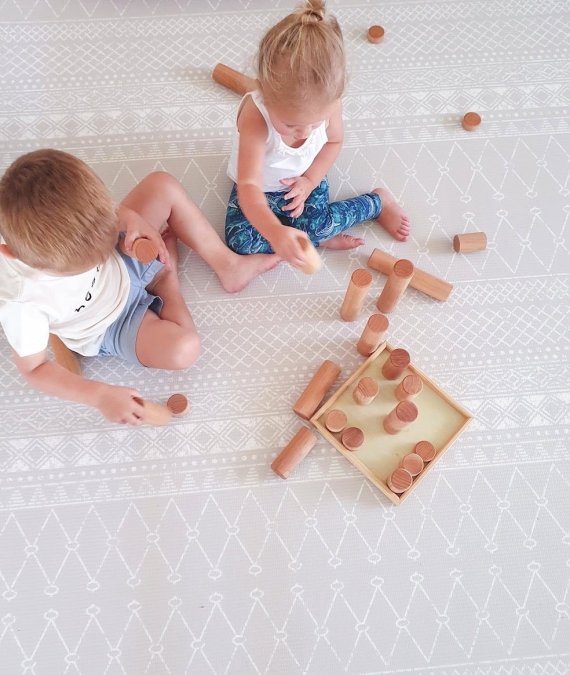
What separates a mat that lasts from one that doesn't:
- Foam density. Low-density foam compresses and stays compressed. High-density foam recovers.
- Cover material. TPU-coated surfaces wipe clean and resist stains from paint, food and nappies.
- Non-slip backing. Essential for children who use wheelchairs, walkers or crawling aids.
- Chemical profile. Look for mats free from BPA and PVC, especially for babies who mouth everything.
A common mistake is buying the cheapest large mat available and discovering within months that the corners curl and the surface has cracked. In a childcare setting, that's not just annoying, it's a compliance issue.
Easy-to-Clean Sensory Flooring Solutions for Busy Classrooms
Easy-to-clean sensory flooring solutions share one trait: the mess stays on the surface instead of soaking in. In a busy classroom, that means wipeable covers, sealed seams and materials that don't need specialist cleaning products.
Here's how the main options compare for childcare and education use:
| Surface | Texture and Feel | Cleaning | Best For |
|---|---|---|---|
| TPU padded playmat | Soft, firm, warm | Wipe with damp cloth | Daily play, messy activities |
| Memory foam rug | Plush, cushioned | Vacuum, spot clean | Reading corners, quiet time |
| Foam lounger | Supportive, mouldable | Removable cover, machine wash | Calm-down zones, sensory spaces |
| Vinyl or hard flooring | Hard, cool, echoing | Mop | Wet areas only |
The Australian Children's Education and Care Quality Authority framework expects services to maintain safe, hygienic environments, and flooring choices feed directly into that. A surface you can wipe down in two minutes between sessions is worth more than one that needs a full strip and reseal.
Safety, Durability and Selecting Safe Flooring for Sensory Needs
Selecting safe flooring for sensory needs means matching the surface to the child, the room and the way that room is actually used. There's no single best product, and anyone who tells you otherwise is selling something.
Use this decision framework:
- If the child seeks deep pressure and crashes a lot: choose thick, high-density foam with a firm base.
- If the child is sound-sensitive: prioritise sound absorption over thickness.
- If the child uses a wheelchair or walker: prioritise grip and a low, stable edge that won't catch wheels.
- If the room hosts messy play: prioritise a wipeable TPU surface over fabric.
- If the space doubles as a rest area: choose something with a removable, washable cover.
Durability questions come down to three things: foam density, cover construction and whether replacement covers are available. A mat with a removable cover can be refreshed rather than replaced, which matters when you're kitting out a whole room.
Creating a Sensory-Friendly Environment in Your Setting
A sensory-friendly environment is built in layers, and the floor is the foundation. Get that right and the rest of the room works harder.
Start with zones rather than one open space. A reading corner with a soft memory foam rug, an active play area with a padded mat, and a calm-down space with supportive seating give children somewhere to go when their regulation needs change. The Cove Sensory Lounger is designed for exactly this: an adjustable recline that moves from upright seat to gentle recliner, with a high-density 25kg/m³ foam core and a removable corduroy cover in Rose, Ocean, Mint or Lavender. The gentle rocking motion supports body awareness and self-regulation, which is what a calm-down corner is actually for.

A few things that make a measurable difference in practice:
- Reduce hard, reflective surfaces where you can.
- Keep sight lines open so children can see the quiet space from anywhere in the room.
- Place soft surfaces where children naturally gather, not where the furniture happens to fit.
- Choose colours that calm rather than compete with the room's visual noise.
For centres in Langwarrin and across VIC, the goal is the same: a room where children can move, settle and regulate without an adult managing them every minute.
Setting up a sensory-friendly room is a genuine challenge, especially when you're balancing regulation needs, hygiene requirements and a budget that has to stretch across a whole centre.
Frequently Asked Questions
What are the best flooring materials for sensory-friendly classrooms?
Memory foam and TPU-coated playmats are strong choices for sensory-friendly classrooms because they cushion falls, reduce noise and feel soft underfoot. High-density foam holds its shape through daily use, while TPU covers wipe clean easily. Look for products free from BPA and PVC, and check that they have been independently safety tested. For quiet corners, a padded mat paired with a sensory lounger creates a calm, comfortable zone children can retreat to when they need to regulate.
Are memory foam playmats suitable for NDIS-funded sensory spaces?
Yes, memory foam playmats can be suitable for NDIS-funded sensory spaces when supplied by a registered NDIS provider. The NDIS may fund sensory equipment if it is reasonable and necessary for a participant's disability support needs and is directly related to their goals. Check that the provider is registered before you buy, and keep your invoices and receipts for your plan manager or support coordinator. A registered provider can confirm whether a specific mat or lounger fits your funding category.
How do I choose between TPU mats and traditional rugs for sensory needs?
TPU mats and traditional rugs serve different purposes in a sensory space. TPU-coated mats are waterproof, wipe clean in seconds and resist stains from paint, food and accidents, which suits high-traffic play areas. Traditional rugs feel warmer and softer but trap dust, need vacuuming and can be harder to sanitise. If hygiene and durability matter most, choose TPU. If you want a cosy reading corner, a memory foam rug with a removable cover offers the best of both.
What safety standards should childcare centres in Victoria follow for floor coverings?
Childcare centres in Victoria must meet the National Quality Framework, including the Education and Care Services National Regulations, which require safe, clean and well-maintained premises. Floor coverings should be non-slip, free from harmful substances and easy to clean. Ask suppliers for independent safety testing and SVHC screening. Under WorkSafe Victoria duties, employers must also manage slip and trip risks, so check that mats sit flat and do not curl at the edges.