


NDIS Funding for Sensory Mats: What Gets Approved
Table of Contents
- How NDIS Funding for Sensory Mats Works
- Reasonable and Necessary Supports NDIS: Applying the Criteria to Sensory Mats
- The NDIS Occupational Therapy Report for Equipment: What It Must Include
- How to Purchase Sensory Mats With NDIS Funds
- Sensory Mats That Meet NDIS Funding Criteria
- Mistakes That Get Sensory Mat Claims Rejected
- Frequently Asked Questions
Last Updated: September 13, 2026
How NDIS Funding for Sensory Mats Works
NDIS funding for sensory mats comes down to one question: is the mat an everyday item, or is it assistive technology? Get that classification right and the claim is straightforward. Get it wrong and you'll waste weeks on a rejected invoice.
At Grace & Maggie, we're a registered NDIS provider, and we've watched families lose months to this distinction. So here's the short version before we get into the detail.
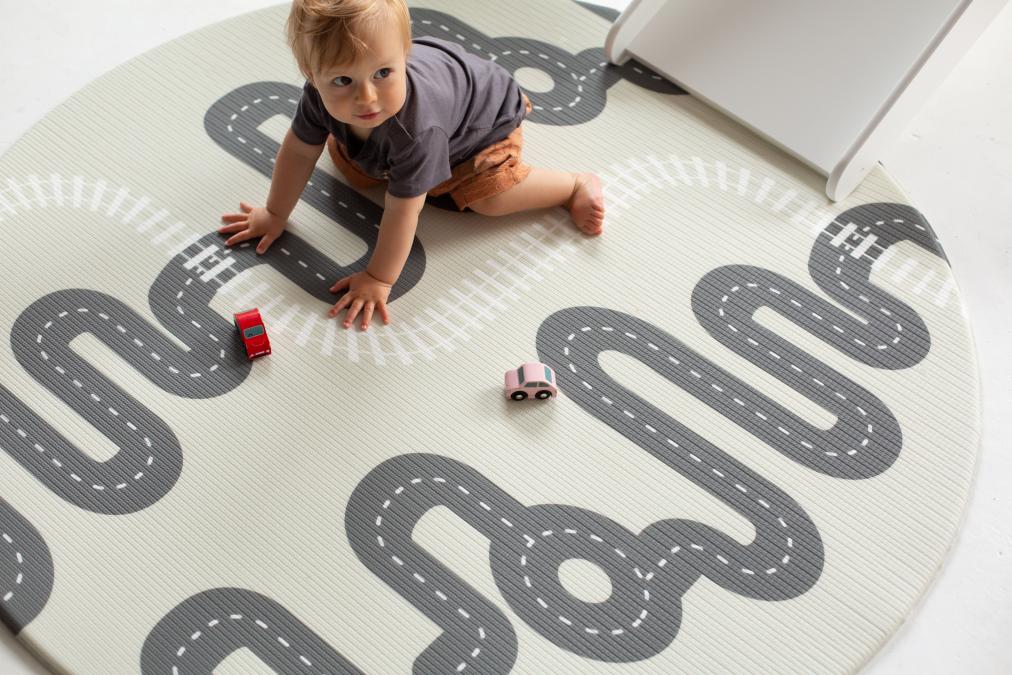
Everyday Items vs Assistive Technology
The NDIS generally won't fund items that most families buy anyway (ndis.gov.au). A standard playmat from a department store counts as an everyday item, because it's not specifically designed to address a disability-related need.
Assistive technology is different. It's equipment or products designed to help a person with disability do something they otherwise couldn't, or do it more safely. A sensory mat with non-slip backing, therapeutic density and documented sensory regulation benefits sits in that category.
What most guides miss is that the mat itself barely matters at this stage. The documentation is what decides it.
Which Budget Pays for a Sensory Mat
Most sensory mats are claimed under Core Supports, specifically the consumables budget, when they're low-cost and low-risk. Higher-cost mats with complex therapeutic claims may be funded through Capacity Building, under assistive technology.
Your NDIA planner sets the budget at plan review. If sensory support wasn't discussed, you'll need a plan review or a light-touch change of circumstances before claiming.
Reasonable and Necessary Supports NDIS: Applying the Criteria to Sensory Mats
Reasonable and necessary supports NDIS criteria are the test every sensory mat claim must pass. The NDIS asks whether the support is related to your disability, value for money, likely to benefit you, and something other services can't reasonably provide.
For a sensory mat, that translates to four practical questions:
- Does the participant have a documented sensory processing need?
- Does the mat address that need specifically, not just provide general comfort?
- Is it the most cost-effective option that achieves the therapeutic goal?
- Would a mainstream alternative work just as well?
That last point trips people up. If a cheap foam mat from a discount store would achieve the same functional outcome, the NDIS will say no. The clinical justification has to explain why it wouldn't.
The NDIS Occupational Therapy Report for Equipment: What It Must Include
An NDIS occupational therapy report for equipment is the document that makes or breaks most sensory mat claims. A generic letter won't cut it, and neither will a product brochure with a diagnosis stapled to it. The report has to translate a clinical need into the NDIS's own decision-making language.
When an OT Report Is Actually Required
The threshold turns on cost, risk and complexity, not on whether the item is called a "sensory mat".
- Low-cost, low-risk items, generally under the low-cost assistive technology threshold, which sits at $1,500 per item in most plans, can often be claimed from Core Supports consumables without a full OT report, provided the link to sensory regulation is documented somewhere in the plan (ndis.gov.au).
- Mid-cost and higher-risk items, anything above that threshold, or any mat making a specific therapeutic claim such as proprioceptive input for a diagnosed sensory processing disorder, is treated as assistive technology and effectively requires an OT assessment.
- Complex or custom mats, weighted, sized to a specific body, or prescribed for a safety purpose such as fall prevention, sit firmly in assistive technology and need the full report.
A common pattern is families buying a mat first and seeking the report afterwards. That inverts the process. The assessment should come first, because the OT's findings determine which budget the mat belongs in.
What the Report Must Cover
A report that survives scrutiny typically addresses six things in order:
- The participant's diagnosis and functional capacity, described in everyday terms rather than clinical shorthand.
- How sensory processing difficulties affect daily living, sleep, self-regulation, transitions, mealtimes, community access.
- Why a sensory mat specifically addresses that need, and what functional outcome it produces.
- Why mainstream alternatives are unsuitable, with the reasoning stated explicitly.
- The recommended product, size, density and specifications, matched to the participant.
- Expected therapeutic outcomes and how progress will be reviewed.
Ask your OT to use the phrase "reasonable and necessary" explicitly and to tie every recommendation back to a functional goal. Decision-makers are looking for that language, and a report that never uses it reads as a preference rather than a support. Connecting these clinical justifications to broader daily living strategies ensures that the requested equipment functions as a sustainable form of support for autistic adults.
A Justification Template You Can Hand to Your OT
Most participants don't know what to ask for, and most OTs are time-poor. Handing over a structured template speeds up the process and reduces the chance of a request being sent back. A workable structure looks like this:
- Participant details, name, NDIS number, plan dates, management type.
- Functional need, one paragraph on the sensory difficulty and the daily activities it disrupts.
- Evidence, assessment findings, observations, and any reports from allied health or education settings.
- Proposed support, the specific mat, its dimensions, density and surface, and why those specifications suit this participant.
- Alternatives considered, mainstream mats, cheaper foam options, weighted blankets, and why each falls short.
- Outcome and review, what improvement is expected, over what period, and how it will be measured.
Getting a Quote From Your OT
If your OT doesn't stock equipment, ask them to provide a written recommendation and a quote request you can send to suppliers. The recommendation should name the specifications, not a brand, so you can compare like for like. Where a supplier provides the mat and the OT provides the justification, keep both documents together, the NDIS may ask for either at audit.
Occupational therapy involvement isn't mandatory for every low-cost item, but for anything above the low-cost threshold, an OT assessment is effectively required. The report is the claim. Treat it that way.
How to Purchase Sensory Mats With NDIS Funds
Self-Managed, Plan-Managed or Agency-Managed
How you purchase depends on how your plan is managed.
Management Type |
How You Pay |
Who Holds Funds |
Best For |
|---|---|---|---|
Self-managed |
You pay, then claim reimbursement |
You |
Fast purchases, flexible providers |
Plan-managed |
Plan manager pays the invoice |
Plan manager |
Less admin, more oversight |
Agency-managed |
NDIS pays registered providers directly |
NDIS |
Participants wanting zero admin |
Self-managed and plan-managed participants can buy from any provider, registered or not. Agency-managed participants must use a registered NDIS provider like Grace & Maggie.
Consumables or Assistive Technology: Which Budget to Claim Against
This is the decision that causes the most rejected claims, and most guides skip it.
- Consumables sits inside Core Supports and covers low-cost, everyday assistive technology, generally items under $1,500 that need replacing regularly or are used day to day. A standard sensory mat at this price point usually fits here.
- Assistive technology sits inside Capacity Building and covers higher-cost or higher-risk equipment, including anything customised, weighted, or prescribed for a specific safety purpose. A mat at this level needs the OT report described above.
If your plan has a consumables budget with room in it, a low-cost mat is usually the simpler claim. If the mat is above the low-cost threshold, or your consumables budget is exhausted, the claim moves to assistive technology and needs the supporting assessment. Claiming a high-cost mat against consumables is a common error and one that gets picked up at plan review.
Getting a Quote and Keeping Your Receipts
Always get a written quote before purchase. For agency-managed plans, the provider needs your NDIS number and plan details on the invoice.
An invoice that clears scrutiny typically includes:
- The participant's full name and NDIS number
- The provider's ABN and, where applicable, NDIS registration number
- A specific item description, "sensory tatami mat, 35mm high-density memory foam, non-slip base" rather than "sensory equipment"
- The date of supply and the amount payable
- Whether GST applies (most NDIS supports are GST-free where they relate to a disability, but the invoice should still state the position)
Keep every receipt, service agreement and quote for five years (ndis.gov.au). The NDIS can audit at any time, and missing paperwork is the most common reason claims get clawed back.

Maintenance, Cleaning and Replacement: The Part Nobody Explains
A sensory mat isn't a one-off purchase. It's used daily, it wears, and eventually it needs replacing. Understanding how to justify that is where most participants get stuck.
Cleaning and maintenance. A mat with a TPU-coated, wipe-clean surface can be maintained with a damp cloth and a mild detergent, which keeps it hygienic without degrading the foam. Mats with removable, machine-washable covers are easier to maintain but the covers themselves may need replacing sooner. Document your cleaning routine if the mat is used in a shared or high-traffic space, it supports the argument that the mat is a functional support, not a decorative item.
Justifying replacement. The NDIS will fund a replacement when the original mat has reached the end of its useful life through normal use, or when the participant's needs have changed. To support a replacement claim, keep:
- The original purchase invoice and OT report
- A dated note of when the mat began to fail, compressed foam, a degraded non-slip base, a torn cover
- Photographs showing the wear
- A short statement from your OT or support coordinator confirming the mat is no longer providing the required therapeutic input
A mat that's simply old isn't enough. A mat that no longer delivers the proprioceptive feedback it was prescribed for is a functional failure, and that's the argument that gets a replacement approved.
Repair versus replace. Where a cover can be replaced separately, that's usually the cheaper and more defensible option. Where the foam core has compressed, repair isn't possible and replacement is the only route. Stating which situation applies makes the claim easier to assess.
Sensory Mats That Meet NDIS Funding Criteria
Not every sensory mat qualifies. The ones that do share specific features:
- Non-slip backing for safety and fall prevention
- Therapeutic density that provides genuine proprioceptive feedback
- Documented sensory regulation benefits in the OT report
- Durable construction that justifies the cost over time
- Easy-to-clean surfaces for hygiene and daily living supports
Grace & Maggie's Snuggle Rugs are built on 35mm high-density memory foam with a non-slip base and a TPU-coated, easy-wipe surface. They're free from BPA and PVC, which matters if you're choosing for a child with sensitivities. The Archer Earth Snuggle Rug at $149 and the Dennis Sensory Tatami Mat at $179 both meet the criteria OT reports typically reference.

Mistakes That Get Sensory Mat Claims Rejected
The same five mistakes come up again and again. Avoid them and your claim is far more likely to clear.
- No clinical justification. Buying first and seeking approval later almost never works.
- Describing the mat as a comfort item. Frame it around functional capacity and therapeutic goals, not cosiness.
- Using a non-registered provider on an agency-managed plan. The claim will be refused outright.
- Missing receipts or service agreements. The NDIS requires a clear paper trail.
- Ignoring the exclusion list. Items considered everyday, or that fall under another funding stream, won't be covered.
Getting a sensory mat approved isn't about finding the right product. It's about proving the mat addresses a documented functional need that nothing cheaper can meet. That's where Grace & Maggie helps: as a registered NDIS provider, we supply high-density memory foam mats with non-slip backing, TPU-coated easy-clean surfaces and BPA- and PVC-free materials, all built to stand up in an OT report. Get started with Grace & Maggie and give your family a sensory surface that's safe, durable and genuinely therapeutic.
Frequently Asked Questions
Is a sensory mat considered a reasonable and necessary support?
It can be, if your occupational therapist links it to your disability-related needs and functional goals. The mat must help you or your child participate in daily activities, be value for money, and not duplicate funding you already receive. A mat used only for general comfort or tummy time is unlikely to qualify, but one recommended for sensory regulation, safe floor time or postural support can meet the reasonable and necessary supports NDIS criteria.
Do I need an occupational therapy report to claim sensory mats?
For most sensory mats, yes. An NDIS occupational therapy report for equipment should explain your functional capacity, why the mat is the right choice, how it supports your therapeutic goals, and why cheaper alternatives are unsuitable. The report gives your NDIA planner or support coordinator the clinical justification they need. Without it, claims for assistive technology are often rejected as everyday items rather than disability-related supports.
How do I purchase sensory mats with NDIS funds?
Get a written quote from a registered NDIS provider, confirm which support category will cover it, then purchase through your chosen management option. Self-managed participants pay upfront and claim reimbursement through the NDIS portal. Plan-managed participants ask their plan manager to pay the invoice. Agency-managed participants need a registered provider. Keep the quote, invoice and OT report together in case the NDIA asks for evidence.
What is no longer funded by NDIS for sensory equipment?
The NDIS does not fund everyday items that most families would buy anyway, such as standard play mats, basic cushions or general toys. It also excludes items covered by other systems like health, education or childcare. If a sensory mat is simply a household purchase with no clinical link to your disability-related needs, it falls outside funding. The exclusion list changes, so check the current NDIS price guide and support catalogue before you buy.