


Are Foldable Playmats for Easy Storage Worth It?
Last Updated: October 31, 2026
Quick Summary
Foldable playmats for easy storage are padded floor mats that fold into compact sections, letting educators set up a play zone in minutes and pack it away just as fast. They suit busy childcare rooms where floor space has to serve several jobs before lunch.
- A folded mat takes up a fraction of the floor area of a flat one.
- Check fold lines before buying, because cheap hinges crease and split first.
- Choose a mat free from BPA and PVC for rooms with infants.
- Stand folded mats upright against a wall or shelf end.
- Measure free floor area first so the mat leaves walking space around the edges.
Table of Contents
- Why Foldable Playmats for Easy Storage Suit Busy Childcare Rooms
- Foldable Play Mats for Daycare: What to Look For
- Easy-Clean Playmats for Childcare: Materials and Maintenance
- Non-Slip Playmats for Classrooms: Safety on Hard Floors
- Playmat Storage Ideas for Childcare That Save Space
- Choosing a Foldable Playmat for Small Learning Spaces
- Matching a Foldable Playmat to Your Centre's Needs
- Frequently Asked Questions
Why Foldable Playmats for Easy Storage Suit Busy Childcare Rooms
Foldable playmats for easy storage are padded floor mats that fold into compact sections, so educators can set up a play zone in minutes and pack it away just as fast. Educators often tell us that floor space is the first thing to run out.
The storage problem in early learning settings
Most rooms have to do three jobs before lunch. A mat that stays out all day eats the space you need for group time, movement and quiet corners.
A common mistake is buying one big roll-up mat. It is heavy, awkward to move alone, and it needs somewhere to lie flat.
How folding changes daily routines
Folding mats turn floor space into something you switch on and off. Staff can clear a room for messy play, then reset it for rest time without dragging furniture around.
Watch out: cheap hinges crease and split first. Check the fold lines before you buy, not after term starts.
Foldable Play Mats for Daycare: What to Look For
The best foldable play mats for daycare are thick enough for comfort, light enough for one person to move, and sealed so spills don't soak in. Those three points decide whether a mat survives a full year of use.
Here is what we would check, in order:
- Thickness and density: enough cushion for crawling, sitting and tumbles
- Fold quality: hinges that stay flat and don't trap fingers
- Surface seal: a wipeable top layer, not a fabric cover
- Weight: one educator should be able to carry and fold it
- Edges: bound and stitched, not raw foam
- Safety: free from BPA and PVC, which matters in rooms with infants
The product safety guidance from the ACCC is a useful starting point for checking what to ask suppliers.
Here are the checks we would run through, in order, before buying a foldable mat for a daycare room.
| Check | What to look for |
|---|---|
| Thickness and density | Enough cushion for crawling, sitting and tumbles |
| Fold quality | Hinges that stay flat and don't trap fingers |
| Surface seal | A wipeable top layer, not a fabric cover |
| Weight | One educator should be able to carry and fold it |
| Edges | Bound and stitched, not raw foam |
| Safety | Free from BPA and PVC |
Easy-Clean Playmats for Childcare: Materials and Maintenance
Easy-clean playmats for childcare use a sealed top surface, usually a TPU or similar wipeable coating over foam, so food, paint and nappy accidents stay on the surface. A quick wipe is the whole routine.
What most guides miss is that cleaning depends on the seams. For practical cleaning steps, see How to Clean TPU Playmats: A Step-by-Step Guide. A sealed surface with stitched, tight edges wipes clean in seconds. Loose seams hold moisture and smell.
Non-Slip Playmats for Classrooms: Safety on Hard Floors
Non-slip playmats for classrooms need a base that grips hard flooring, because slips happen when a mat slides under a running child. Look for a textured underside and a mat heavy enough to stay put. Our Best Non Slip Mats For Toddlers guide covers choosing genuinely non-slip mats for hard classroom floors.
A common mistake is putting a lightweight mat on polished concrete or vinyl. It creases, shifts and becomes a trip hazard within a week.
Playmat Storage Ideas for Childcare That Save Space
Good playmat storage comes down to three moves: fold it, stand it, and give it a home. A folded mat takes up a fraction of the floor area of a flat one.
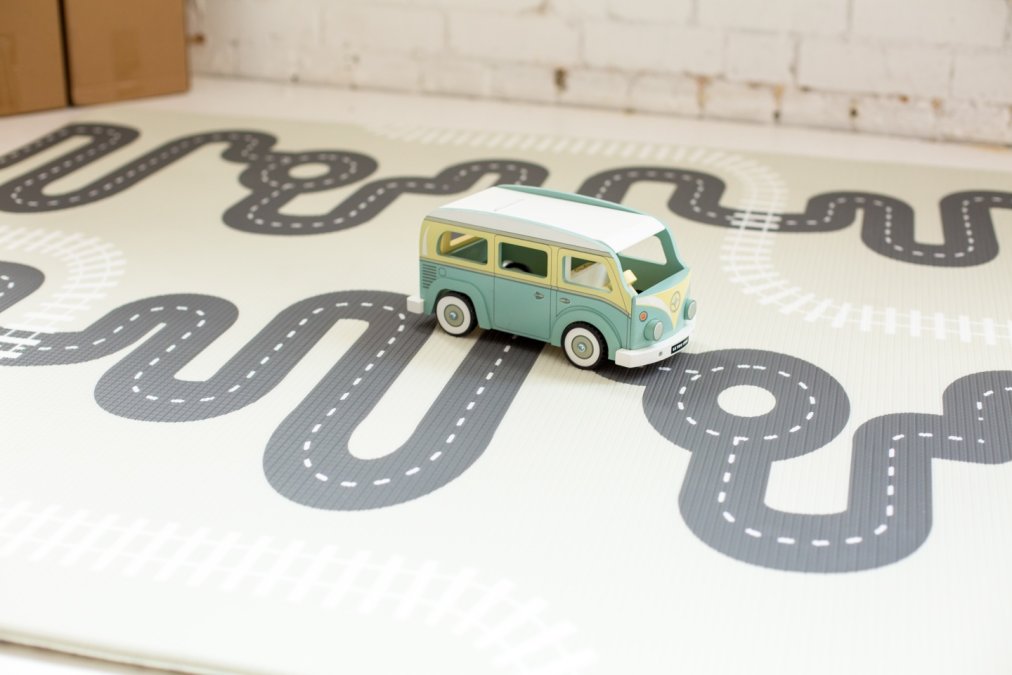
Try these:
- Stand folded mats upright against a wall or shelf end
- Use a deep basket or trolley so mats stay off the floor
- Label shelves by room so staff return mats to the right spot
- Keep one folded mat per room rather than a shared stack
- Store away from heaters and direct sun
Choosing a Foldable Playmat for Small Learning Spaces
A foldable playmat for a small room should match the floor, not fight it. Measure the free floor area first, then pick a mat that leaves walking space around the edges. Our Playmat Size Guide Which Size Playmat Is Best For Me helps you pick the right dimensions for a small room.
Ask three questions before you choose:
- Does the folded size fit your storage shelf?
- Does the open size leave a clear path around it?
- Can one person set it up alone?
Matching a Foldable Playmat to Your Centre's Needs
Start with how the room is used, not with the mat. A sensory corner, a reading nook and a group-time space each need something different.
At Grace & Maggie, our premium TPU Padded Playmats are built for high-use early learning rooms. They are free from BPA and PVC, easy to wipe down, and soft enough for floor play. Our Snuggle Rugs combine high-density memory foam with contemporary designs for reading, group activities and quiet time. These durable surfaces provide the ideal foundation for children to engage with screen-free games while developing essential cognitive skills during their most formative years.
You can browse our full range to see what suits your rooms. We are a Registered NDIS Provider.
Frequently Asked Questions
What should childcare centres look for in a foldable playmat?
Look for a mat that folds for storage and uses a wipe-clean surface. Check that it is free from BPA and PVC if chemical exposure is a concern, and confirm the thickness suits floor play and quiet time. A mat that is too thick can be awkward to fold and store, so aim for a balance between comfort and portability. Also check the folded dimensions against your storage space before buying.
Are foldable play mats for daycare suitable for every room?
They work well in most daycare rooms, but the right choice depends on floor type and activity. Hard floors benefit from a non-slip base, while carpeted areas may need a mat with enough grip to stay put during group activities. For small rooms, choose a mat that folds compactly and can be stored upright. If the room is used for messy play, an easy-clean surface is more practical than a fabric mat.
How do you store playmats neatly in a classroom?
Fold the mat along its seams and stand it upright against a wall or shelf to save floor space. A dedicated storage basket or a labelled hook keeps mats tidy and easy to find. Avoid stacking heavy items on top of folded mats, as this can compress the foam. If you have multiple mats, rotate them and store each in the same spot so educators know where to return them at pack-up time.
How can educators keep easy-clean playmats for childcare hygienic between uses?
Wipe the surface with a mild detergent and water after each session, then dry it fully before folding. For shared spaces, a daily wipe-down of high-touch areas and a deeper clean at the end of the week helps. Check the manufacturer's cleaning instructions, as some materials should not be soaked. Storing mats dry prevents moisture build-up and keeps them ready for the next group.
Setting up a childcare room that works hard all day is not about buying more. It is about choosing floor surfaces that fold, wipe and store without fuss. Grace & Maggie can help with TPU padded playmats, memory foam Snuggle Rugs and the Cove Sensory Lounger for calm-down zones. Get started with Grace & Maggie and build a space children love spending time in.
