

Best Baby Activity Toys for Sensory Development
Last Updated: November 1, 2026
Quick Summary
The best baby activity toys for sensory development combine multi-sensory input, safe BPA-free and PVC-free materials, and a firm padded base that lets babies roll, reach and crawl confidently. Start with the floor: a padded playmat or Snuggle Rug supports tummy time and protects knees and heads as movement develops.
- Large padded playmats measure approximately 200cm x 140cm x 1.5cm and are reversible.
- Snuggle Rugs use 35mm-thick 35D memory foam with a non-slip base for quiet floor play.
- The Cove Sensory Lounger offers adjustable recline and gentle rocking for vestibular input.
- Rotate two or three textured, sound-making toys at a time and swap them weekly.
- For childcare rooms, mix playmats for active play with Snuggle Rugs and Coves for calm-down corners.
Table of Contents
- What to Look for in Toys That Support Sensory Development
- Quick Comparison: Sensory Activity Toys for Babies
- Sensory Toys for Babies: Padded Playmats and Snuggle Rugs
- Developmental Toys for Babies by Age: Matching Play to Milestones
- The Cove Sensory Lounger: Calming Movement for Wiggly Kids
- Safe Sensory Play for Infants: Materials, Cleaning and Supervision
- Baby Activity Gym and Playmat: Building a Sensory Corner That Works
- Choosing the Right Sensory Play Setup for Your Space
- Frequently Asked Questions
What to Look for in Toys That Support Sensory Development
Sensory development is the process through which babies learn to take in, organise and respond to information from sight, sound, touch, taste, movement and body position. The best baby activity toys for sensory development are the ones that let a baby safely explore more than one sense at once, on a surface that cushions falls and cleans up easily. At Grace & Maggie, we design for exactly that combination, creating play surfaces built for daily, high-use sensory play in childcare centres and homes.
Below, we break down what actually matters when you're choosing, then compare the options we make so you can match a setup to your space and your child's stage.
Here's what most buying guides get wrong: they treat sensory toys as a bin of plastic oddments. In practice, the floor is the toy. A baby spends most of their waking hours on it, and what they're lying on determines how freely they can roll, reach, crawl and explore.
Three things decide whether a toy genuinely supports sensory development:
- Multi-sensory input. A toy that rattles, has a textured edge and a soft body gives more to explore than one that only makes noise.
- Safety of materials. Babies mouth everything. Look for BPA-free and PVC-free materials, and check any certifications a product lists.
- A supportive base. Firm, padded flooring lets a baby practise tummy time, sitting and crawling without fear of a hard landing.
Watch out: the common mistake is buying a pile of small toys before sorting out the floor. A wriggly baby on a slippery hard surface spends more energy staying put than exploring.
Quick Comparison: Sensory Activity Toys for Babies
| Option | Price (AUD) | Best For | Standout Feature |
|---|---|---|---|
| Large Padded Playmat | $219 | General play, tummy time, shared rooms | Reversible design, TPU-coated, BPA and PVC free |
| Snuggle Rug | $169-$189 | Cosy floor play and reading corners | 35mm thick 35D memory foam, non-slip base |
| Cove Sensory Lounger | $269 | Calm-down zones, wiggly kids | Adjustable recline with gentle rocking |
| Hazel the Mallard Duck Comforter | $29.50 | Comfort and teething on the go | Cotton gauze with knotted corners and attached teether |
That's the short version. The rest of this guide explains how each one fits into a real room.
Sensory Toys for Babies: Padded Playmats and Snuggle Rugs
Start with the surface, because it's the piece every other toy sits on. A padded playmat gives a baby a defined, soft area for tummy time and rolling, and it protects knees and heads once crawling starts.
Our large padded playmats measure approximately 200cm x 140cm x 1.5cm and are reversible, so one side can be a calm geometric design and the other something more playful. They're made from TPU-coated materials and are free from BPA and PVC.
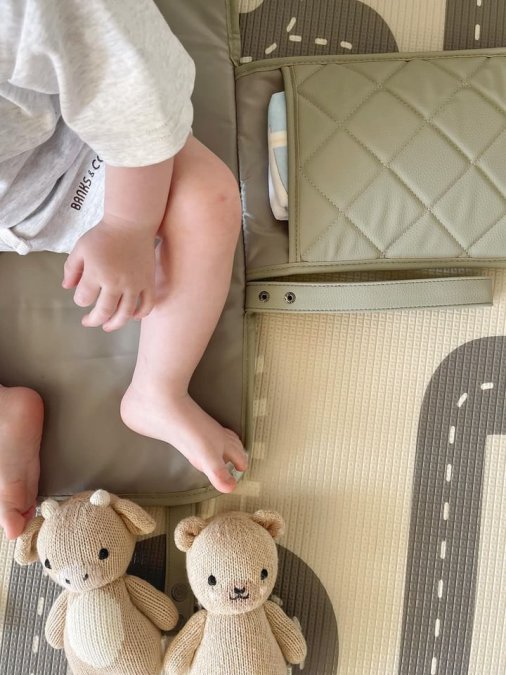
Snuggle Rugs take a different approach. These are 35mm-thick memory foam rugs with a 35D density and a non-slip base. They suit reading corners and quiet floor play where you want warmth underfoot.
If you want to see a specific option, you can browse the Baby Driver Boho large padded playmat to check the size and finish against your room.

Best for: playrooms, lounge rooms and shared living spaces where the mat needs to look like furniture. Skip if: you need a fully waterproof surface for messy play, in which case go with the TPU-coated playmat.
Developmental Toys for Babies by Age: Matching Play to Milestones
The right toy at the wrong age frustrates everyone. Here's a practical way to match play to what a baby is actually working on.
- 0-3 months: high-contrast patterns, soft textures and gentle sound. A comforter with knotted corners gives small hands something to grip.
- 3-6 months: reaching and grasping. Lightweight toys a baby can hold and mouth, plus plenty of supervised tummy time on a padded surface.
- 6-9 months: sitting and rolling. A firm mat matters here, because babies topple sideways as they learn to sit.
- 9-12 months: crawling and pulling up. Give them open floor space and a non-slip base so their knees don't slide out.
- 12 months and up: imaginative play. Reversible mats with track designs or patterns can become roads, towns and landscapes.
A common mistake is leaving a baby on their back with a toy dangled overhead for too long. Tummy time on a comfortable mat builds the neck and core strength that sitting and crawling depend on.
The Cove Sensory Lounger: Calming Movement for Wiggly Kids
Some children don't settle on a flat mat, and that's where the Cove Sensory Lounger earns its place. It's an adjustable two-piece seat that moves from an upright position to a gentle recline, with built-in handles so a child can grip while rocking.
The gentle rocking motion provides vestibular input, which is the sense of movement and body position. For a child who seeks movement, that input can support body awareness, self-regulation and focus. The foam is 25kg/m³ high-density, and the corduroy cover is removable and easy to clean.
It's independently safety tested and SVHC screened for safe, everyday contact. You can explore the full Cove Sensory Lounger range in Rose, Ocean, Mint and Lavender.
Best for: calm-down zones, reading corners and breakout areas in early learning rooms. Skip if: you're setting up a newborn's first play area, where a flat mat is the better starting point.
Safe Sensory Play for Infants: Materials, Cleaning and Supervision
Safety in sensory play comes down to three things: what the product is made from, how you clean it, and how closely you supervise.
On materials, check for BPA-free and PVC-free construction and look for recognised textile certifications. The playmats are TPU-coated and free from BPA and PVC.
On cleaning, vacuum regularly and spot clean stains. Removable covers, like the ones on the Cove, are easy to clean.
On supervision, no sensory setup replaces an adult nearby. Small parts, teethers and soft toys all need checking for wear, and a baby on a mat still needs eyes on them.
For a deeper look at surfaces and hygiene, our guide to safe flooring for sensory needs walks through the practical decisions.
Baby Activity Gym and Playmat: Building a Sensory Corner That Works
A sensory corner doesn't need a spare room. It needs a defined patch of floor, a soft base, and a small rotation of toys that changes as your baby grows.
Here's how we'd set one up:
- Choose the base. A padded playmat for wipe-clean everyday use, or a Snuggle Rug for a warmer, cosier feel.
- Add an activity gym. A simple frame with hanging toys gives a baby something to bat at during tummy time.
- Rotate a few toys. Two or three textured, sound-making toys at a time is plenty. Swap them weekly to keep interest up. For a practical sensory activity idea, see how to colour dye rice for sensory activities.
- Create a calm end. A Cove Lounger or a pile of cushions gives an older baby a place to retreat to.
- Keep it clear. Resist filling every centimetre. Open floor space is where crawling happens.
Choosing the Right Sensory Play Setup for Your Space
Small apartments and big centre rooms need different answers, and the honest advice is to measure first.
For a compact lounge room, a single large playmat at 200cm x 140cm often does the job, and it can double as a base for tummy time or a home workout. For a childcare room with several children, you'll likely want a mix: playmats for active play, Snuggle Rugs for reading and rest, and a Cove or two for the calm-down corner. For a child with sensory processing needs, start with the surface and the seating, then add toys. You can also browse sensory toys baby essentials Grace Maggie to finalize your setup.
The thing nobody tells you about sensory setups is that they evolve. What works at four months won't at fourteen. Buy the base well and add the rest as your child's needs change.
Setting up a sensory space that actually gets used takes more thought than a quick online order. Grace & Maggie designs padded playmats, memory foam Snuggle Rugs and the Cove Sensory Lounger for homes, childcare centres and schools, with TPU-coated materials free from BPA and PVC, removable covers, and independently safety tested materials. We're a registered NDIS provider, and our range is designed in Australia for the daily demands of busy play rooms. Get started with Grace & Maggie and build a sensory corner your children will genuinely want to spend time in.
Frequently Asked Questions
What are the best sensory toys for babies?
The best sensory toys for babies are ones that engage touch, sight, hearing and movement without overstimulating them. Padded playmats give a soft, safe surface for tummy time and crawling, while memory foam snuggle rugs add cushioning and warmth. Textured comforters with knotted corners and attached teethers support mouthing and grasping. For movement, a sensory lounger with gentle rocking helps body awareness. Look for non-toxic materials, easy-clean covers and products that suit your baby's current stage rather than a single all-purpose toy.
How do I choose developmental toys for babies by age?
Match the toy to what your baby can physically do. Newborns to around four months benefit from high-contrast visual stimulation and soft surfaces for supervised tummy time. From four to eight months, babies grab, mouth and roll, so textured comforters and stable playmats matter. From eight months onward, crawling and pulling up call for cushioned flooring and toys that encourage movement. A padded playmat or snuggle rug works across every stage, which makes it a practical base layer for developmental toys for babies by age.
Are playmats useful for baby sensory play?
Yes. A playmat is often the foundation of baby sensory play because it defines a safe, cushioned zone for movement. A padded playmat around 200cm by 140cm by 1.5cm gives plenty of room for rolling, crawling and tummy time, and doubles as a base for an activity gym. Memory foam snuggle rugs at 35mm thick add extra cushioning for sit-and-play sessions. Choose one with a non-slip base and a wipe-clean surface so it holds up to daily use in a home or childcare setting.
What makes safe sensory play for infants in childcare settings?
Safe sensory play for infants starts with materials and supervision. Choose products free from BPA and PVC, with covers you can remove and clean, and check that items have been independently safety tested. In childcare and early learning rooms, non-slip bases prevent mats shifting under crawling babies, and firm foam holds its shape so there are no soft spots or tripping edges. Keep play sessions short, rotate toys to avoid overstimulation, and always supervise mouthing and tummy time.
