

What Can Replace a Traditional Classroom Rug?
Last Updated: October 24, 2026
Quick Summary
Padded playmats are the most practical replacement for traditional classroom rugs, offering the same footprint and softness with a wipe-clean, waterproof surface and a firmer base for floor play. Look for a non-slip base, sealed edges and around 1.5cm thickness so the mat stays put and lifts easily for cleaning.
- Padded playmats wipe clean in seconds, unlike woven rugs that trap crumbs, spills and dust in their fibres.
- Check for a non-slip base, because a smooth underside will slide on polished floors.
- Around 1.5cm thickness gives enough cushioning for floor play without becoming a trip hazard.
- Layer a thick padded base with cushions and a lounger to build a reading corner.
- Wipe the surface daily, spot clean weekly and lift the mat termly to clean beneath it.
Table of Contents
- Why Traditional Classroom Rugs Fall Short in Early Learning Rooms
- Padded Playmats for Childcare: The Practical Swap
- Soft Flooring for Early Learning Environments: Materials Compared
- Classroom Reading Corner Alternatives That Actually Work
- Easy-Clean Play Mats for Schools: What Survives a Busy Day
- Matching the Surface to Age Groups and Learning Styles
- Choosing Your Floor Surface for the New Year
- Frequently Asked Questions
Why Traditional Classroom Rugs Fall Short in Early Learning Rooms
A traditional classroom rug looks the part until a four-year-old tips a paint pot on it. Then you discover the truth: most woven rugs in early learning rooms are hard to clean, hard to move, and quick to fray at the edges. This guide from Grace & Maggie looks at the practical alternatives to traditional classroom rugs for early learning rooms, from padded playmats to soft flooring, and how each one holds up in a real childcare setting.
The core problem is simple. A woven rug traps crumbs, spills and dust in its fibres, and spot cleaning rarely gets it back to clean. In a room used by twenty children a day, that adds up fast. Many centres find they replace cheap rugs every couple of years, which costs more than buying a durable surface once.
Below, we'll show you exactly what to check before you swap, plus a comparison of the main options and who each one suits.
Padded Playmats for Childcare: The Practical Swap
Padded playmats are the most direct replacement for a traditional rug. They give you the same footprint and softness, but with a wipe-clean surface and a firmer base for crawling, tumbling and floor play.
For childcare rooms, the difference that matters is the surface. Our TPU Padded Playmats are free from BPA and PVC and wipe clean in seconds, which matters when a spill happens mid-session. The large size is roughly 200cm by 140cm, so it covers a generous floor area without needing to be moved for cleaning.
Browse our padded playmat options to see sizes and designs that suit a childcare room.
What to Check Before You Buy
Run through this checklist before you commit to any padded mat for a centre:
- Thickness: around 1.5cm is enough cushioning for floor play without becoming a trip hazard
- Surface material: wipe-clean and waterproof beats fabric every time in a busy room
- Non-slip base: the mat must stay put when children run and turn on it
- Edges: check they are bound or sealed, not loose, so they don't curl up
- Two-sided design: a reversible mat gives you two looks for the price of one
- Weight: light enough for one educator to lift and move for cleaning
Watch out: a mat with a smooth underside will slide on polished floors. Always check the base grips before you put it in a room where children move fast.
Soft Flooring for Early Learning Environments: Materials Compared
Soft flooring for early learning environments comes down to four realistic options, and each one trades off cost, comfort and maintenance differently. Here's how they compare for a childcare setting.
| Option | Best For | Cleaning | Durability | Main Trade-Off |
|---|---|---|---|---|
| Padded playmat | General play areas | Wipe clean | High | Higher upfront cost |
| Memory foam snuggle rug | Reading and quiet zones | Spot clean, vacuum | Medium-high | Needs time to flatten after delivery |
| Foam interlocking tiles | Large open floors | Wipe clean | Medium | Can separate at the seams |
| Vinyl or cushioned sheet flooring | Whole-room coverage | Mop clean | High | Fixed in place, no flexibility |
Padded playmats win on flexibility. You can move them between rooms, roll them up for storage, and replace one without redoing the whole floor. Memory foam snuggle rugs add a softer, warmer feel for quiet corners, though they need a few days to fully expand after unrolling.
If you're weighing materials for a sensory space, our guide to safe flooring for sensory needs walks through the safety features to prioritise.
Classroom Reading Corner Alternatives That Actually Work
The best classroom reading corner alternatives are layered soft surfaces rather than one big rug: a thick padded base, a few cushions, and a supportive seat for children who need to lean back. This combination gives you a defined, calm space without the cleaning problems of a woven rug.
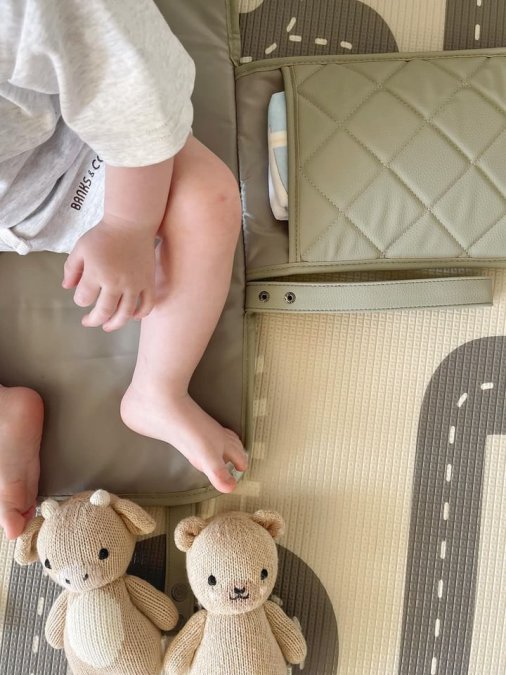
Think about how children actually use a reading corner. Some lie on their stomachs, some sit cross-legged, and some need to lean against something. A flat rug only serves the first group well. Pair a padded mat with a lounger and you cover all three.
Our Cove Sensory Lounger is built for exactly this. Its two-piece design allows multiple seating positions and a gentle rocking movement, which suits reading corners, calm-down zones and breakout areas. For more ideas on setting up a calm space, see how to create a calm corner in schools.
Easy-Clean Play Mats for Schools: What Survives a Busy Day
Easy-clean play mats for schools need three things: a waterproof surface, sealed edges, and a base that doesn't trap dirt underneath. A mat that fails any one of these will look tired within a term.
Here's what a realistic cleaning routine looks like for a wipe-clean mat:
- Daily: wipe the surface with a damp cloth after sessions
- Weekly: spot clean high-traffic patches and check the edges
- Termly: lift the mat, clean the floor beneath, and check the base for wear
That's it. No washing machine, no drying time, no waiting for a rug to come back from a cleaner. If you want the full method, our playmat cleaning guide covers exactly what to use and what to avoid.
Watch out: harsh chemical cleaners can break down the surface coating over time. Stick to mild soap and water for routine cleaning.
Matching the Surface to Age Groups and Learning Styles
The right surface changes with the age group in the room. A babies' room needs maximum cushioning for tummy time and early crawling. A toddlers' room needs a firm, stable base for running and building. A preschool room needs defined zones for group time, quiet reading and active play.
Learning style matters too. Children who seek sensory input often settle better on a surface with some texture and give, like a memory foam snuggle rug. Children who need to move while they think do better with an open padded area where they can stretch out.
Our Snuggle Rugs use high-density 35D memory foam and expand to 35mm thick, with a non-slip bottom that keeps them stable. They work well as a quiet-zone layer next to a harder-wearing playmat.
Here's a simple way to decide:
- Babies' room: thick padded playmat, wipe-clean surface
- Toddlers' room: large padded playmat plus a snuggle rug for rest time
- Preschool room: padded mat for group time, lounger and snuggle rug for reading
- Sensory or calm-down zone: snuggle rug plus a rocking lounger
Choosing Your Floor Surface for the New Year
Start with the room, not the product. Measure the floor area, note how many children use it and for what, then match the surface to those needs. A centre in Langwarrin, VIC, with polished concrete floors will want a non-slip base as a priority, while a carpeted room can lean toward softer layers.
If you're sourcing as a school or daycare provider, see how we work with schools and daycare providers before you commit to a bulk order. It covers what to expect when buying for a centre rather than a home.
One honest limitation: padded mats cost more upfront than a cheap woven rug. But when you factor in replacements and cleaning time, the maths usually favours buying once. For centres near me in the Langwarrin area, we can talk through which surface suits your rooms before you order.
Furnishing an early learning room shouldn't mean choosing between safe and easy to clean. Grace & Maggie designs padded playmats, memory foam snuggle rugs and the Cove Sensory Lounger specifically for busy education settings, with wipe-clean TPU surfaces, non-slip bases and foam that holds its shape. We're a registered NDIS provider and a 2025 Bounty Award winner, and we've helped childcare and education providers across VIC create spaces children love. Get started with Grace & Maggie and furnish a room that works as hard as your educators do.
Frequently Asked Questions
What can you use instead of a traditional classroom rug?
Padded playmats, memory foam snuggle rugs and portable mats are the three main swaps. Padded playmats give a firm, wipeable surface for group time and messy play. Memory foam snuggle rugs add cushioning for reading corners and calm-down zones. Portable mats suit outdoor and excursion use. Each removes the main weakness of woven classroom rugs: they trap dust and stains and cannot be wiped between sessions.
Are padded playmats for childcare settings genuinely durable enough?
It depends on the construction. Look for a sealed, waterproof top layer rather than a fabric face, a foam core that holds its shape under furniture, and edges that do not curl after repeated cleaning. A mat around 1.5cm thick with a coated surface handles daily group time, snack spills and equipment being dragged across it. Ask how the surface is cleaned before you commit, because a mat that needs machine washing will not last a term.
What should educators consider when choosing soft flooring for early learning environments?
Start with slip resistance, since children run and change direction without warning. Then check the cleaning method, drying time and whether the surface can be wiped between sessions rather than removed for a day. Confirm the materials are free from BPA and PVC if you are specifying for under-threes, and check the mat sits flat without lifting at the edges. Size matters too: measure the actual floor area, not the rug you are replacing.
Are memory foam snuggle rugs useful in a reading or quiet corner?
Yes, particularly where children sit or lie on the floor for longer stretches. A high-density foam rug around 35mm thick cushions knees and hips and absorbs the noise of movement, which helps a quiet corner stay quiet. Choose one with a non-slip base and a water-resistant top so spills wipe away. They suit reading nooks and sensory spaces better than high-traffic walkways.
